Thursday, January 12, 2012

How to Listen Well

Communicating properly has as much to do with listening as it does with talking to someone else. Learning how to be a good listener will help improve all of your relationships.

1.
When you are trying to talk to someone, it can be easy to tune out what they are saying and let your mind wander. Keeping your focus on the person talking, without interrupting them, has to be done on purpose. Looking at them will help you remember to listen and pay attention.

2.
When it's your turn to talk, repeat what you think they were saying. This is important, because sometimes in communication the meaning can get lost in our interpretation. Repeating it as you understood it, asking if you understand what they meant, will give them the opportunity to correct any misunderstanding by rephrasing what they said so the point is clear. It will also keep you from misunderstanding the meaning and getting angry or hurt over it.

3.
After you have the full meaning of what they said, you can respond to the points made. When you are done, make sure the proper understanding is there of what you meant, by carefully listening to them repeat what they heard. If they didn't understand correctly, repeat what you said by rephrasing it.


Tips & Warnings

Being a good listener is important in any relationship. If you communicate well with each other, you will have much less misunderstanding, hurt feelings and arguments.

When you are practicing listening well, it can be difficult to keep your attention focused. Try to make eye contact, and respond once in a while with nodding or in some other way letting the other person know you are listening. Keeping distractions to a minimum will help you focus on the conversation.

Read more: How to Listen Well | eHow.com http://www.ehow.com/how_2303011_listen-well.html#ixzz1jFR1WKGD

Thursday, January 5, 2012

Foods you should be eating to jump-start the new year

By Sarah Bernard

Sugary cakes. Glazed hams. Egg nog. That’s all behind you now. Wipe the slate clean and start the new year on a healthy note by focusing on vitamin-rich foods that you can incorporate into every meal going forward. “Today” show health expert Joy Bauer came by to talk about the superfoods we should all be eating. Thankfully, her picks are delicious and easy to find. From spicy veggies to protein powerhouses to sweet treats...

The best way to reset your eating habits after the holidays is to stock your fridge with fresh, nutrient-rich foods that give you energy and improve your mood.

LENTILS
These beans are filled with high-quality vegetarian protein and fiber, which boost energy and mood. They’re inexpensive and they cook up in 30 minutes or less. Joy suggests making large pots of lentil soup or lentil chili so you can freeze the leftovers.

BRUSSELS SPROUTS
Toss some Brussels sprouts on a baking sheet, add olive oil and salt, and then bake until they're crispy. We have no doubt they will become your favorite veggie. Added bonus: They're only 55 calories per cup and they help fight cancer and boost memory.

FROZEN BERRIES
Keeping bags of frozen raspberries, blueberries, blackberries and strawberries on hand is a perfect way to make sure you still get antioxidants, especially during the winter months when fresh fruit is hard to come by. Eat them right out of the bag, add them to cereal, or make delicious smoothies.

HOT PEPPERS
Hot peppers can suppress your appetite and rev up your metabolism.

http://shine.yahoo.com/the-thread/5-foods-you-should-be-eating-to-jumpstart-the-new-yea.html

Saturday, December 24, 2011

Merry Christmas and Happy New Year

We wish you a Merry Christmas!
And a Happy New Year!
:)))

Saturday, November 19, 2011

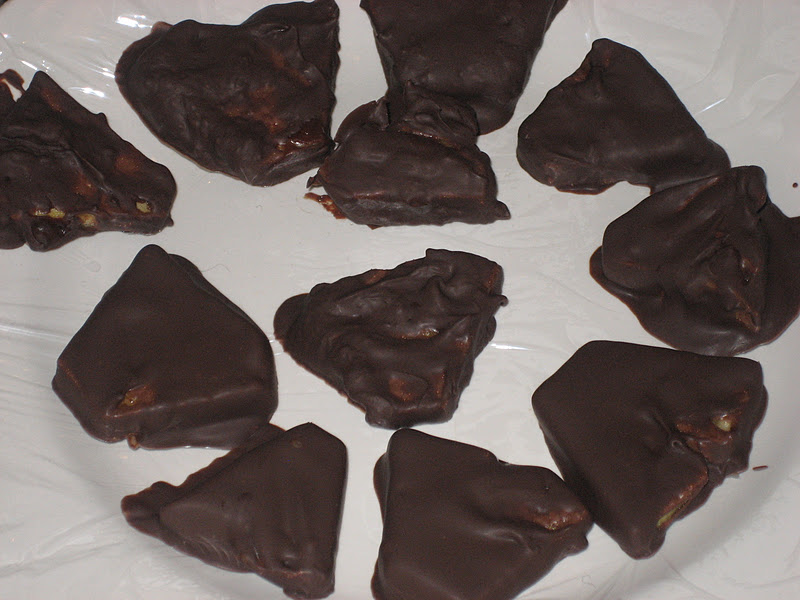
Chocolate covered pineapple

Long time no blog :).   I have been sooooo.... very busy on the Vietnamese blogs that I almost forgot I still own this blog :).  Anyway, if you see anything you like on amthucchay.blogspot.com, please ask for the recipe, I will be very happy to do my best to translate for you. 

Chocolate covered pineapple is one of my favorites.  I finally learned how to make it looks smooth.  Here is the recipe, it is so easy.  I am sure you can do it without any problems. 

1/2 bag of Hershey chocolate chips


1 tablespoon vegetable shortening


1/4 pineapple, peepled, cored, sliced

  1. Use a double boiler to melt the chocolate that has been mixed with shortening
  2. Pat dry the pineapple slice with a paper towel
  3. Dip the pineapple slice into the chocolate sauce
  4. Use the toothpick to pick it up and lay it on the plate lined with plastic wrap
  5. Repeat the dipping for all of the pineapple slices
  6. If the sauce gets thicken because of the acid from the pineapple, it's time to chop up the pineapple and pour it in the chocolate sauce then pour the mixture into to a mold that has been lined with plastic wrap


Refigerate until the chocolate gets harden.
Then it's time to enjoy!

Have fun.

Monday, October 24, 2011

11 Table Manners That Still Matter


by Reader's Digest Magazine, on Wed Oct 19, 2011 6:36am PDT

If you think people don’t care about etiquette at the table as much as they used to, think again. One soup slurp or tooth pick is all it takes to turn some people off. So to stay on your toes, here is a quick—and necessary—table manners refresher course from Louise Fox of the Etiquette Ladies, Canada’s Etiquette Experts:

Watch: Top 10 Table Manners You Need to Know

If you are the recipient of a toast, keep your glass at arm’s length—never drink from it. Instead, simply nod your head and graciously say, “Thank you.”
Never take your cocktail to the dinner table.
Allow your food to cool on its own—never blow on anything.
If you wear lipstick, keep it off your plate and napkin by blotting it as soon as you apply it.
Your napkin is there for you to dab your mouth only. Do not use it to wipe off lipstick or (God forbid) blow your nose.
Keep your elbows off the table at all times.
Don’t put your purse, keys, sunglasses, or eyeglasses on the table.
Take food out of your mouth the way it went in. If a piece of steak fat went into your mouth with a fork, spit it out onto the fork.
Remove an olive pit with your thumb and index finger.
Taste everything on your plate before you add salt or pepper.
Leave your plate where it is when you are finished with your meal—don’t push it away from you.

You’ll find even more good-behavior tips at http://www.etiquetteladies.com/etiquette_ladies_home.php.

Saturday, October 8, 2011

3 health reasons to cook with cast-iron


By Kerri-Ann Jennings, M.S., R.D., Associate Nutrition Editor at EatingWell Magazine
 
Cast-iron skillets may seem like an old-fashioned choice in the kitchen. But this dependable cookware is a must in the modern kitchen. Cast-iron skillets conduct heat beautifully, go from stovetop to oven with no problem and last for decades. (In fact, my most highly prized piece of cookware is a canary-yellow, enamel-coated cast-iron paella pan from the 1960s that I scored at a stoop sale for $5.) As a registered dietitian and associate nutrition editor of EatingWell Magazine, I also know that there are some great health reasons to cook with cast iron.

1. You can cook with less oil when you use a cast-iron pan.
That lovely sheen on cast-iron cookware is the sign of a well-seasoned pan, which renders it virtually nonstick. The health bonus, of course, is that you won’t need to use gads of oil to brown crispy potatoes or sear chicken when cooking in cast-iron. To season your cast-iron skillet, cover the bottom of the pan with a thick layer of kosher salt and a half inch of cooking oil, then heat until the oil starts to smoke. Carefully pour the salt and oil into a bowl, then use a ball of paper towels to rub the inside of the pan until it is smooth. To clean cast iron, never use soap. Simply scrub your skillet with a stiff brush and hot water and dry it completely.

2. Cast iron is a chemical-free alternative to nonstick pans.
Another benefit to using cast-iron pans in place of nonstick pans is that you avoid the harmful chemicals that are found in nonstick pans. The repellent coating that keeps food from sticking to nonstick pots and pans contains PFCs (perfluorocarbons), a chemical that’s linked to liver damage, cancer, developmental problems and, according to one 2011 study in the Journal of Clinical Endocrinology & Metabolism, early menopause. PFCs get released—and inhaled—from nonstick pans in the form of fumes when pans are heated on high heat. Likewise, we can ingest them when the surface of the pan gets scratched. Both regular and ceramic-coated cast-iron pans are great alternatives to nonstick pans for this reason.

3. Cooking with cast iron fortifies your food with iron.
While cast iron doesn’t leach chemicals, it can leach some iron into your food...and that’s a good thing. Iron deficiency is fairly common worldwide, especially among women. In fact, 10% of American women are iron-deficient. Cooking food, especially something acidic like tomato sauce in a cast-iron skillet can increase iron content, by as much as 20 times.

Thursday, October 6, 2011

Yao Ming, Branson join to fight shark fin trade

Recently retired Chinese NBA star Yao Ming and British tycoon Richard Branson made an appeal in Shanghai against eating shark fins, which are a staple of high-class Chinese banquets. (AP)


Virgin Group head Richard Branson (L) and former NBA player Yao Ming attend a news conference organised by Wildaid, a wildlife conservation group, to promote shark conservation in Shanghai September 21, 2011.